Category: Issues
The 11th Circuit Court of Appeals Rules in Favor of Catoosa GOP’s Right of Association on the Primary Ballot
The 11th Circuit Court of Appeals Rules in Favor of Catoosa GOP’s Right of Association on the Primary Ballot

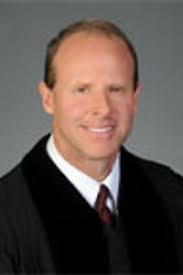
Judge Billy Ray

Atlanta, GA — The federal 11th Circuit Court of Appeals has reversed the trajectory of the Catoosa GOP’s case dealing with their right to refuse to allow four RINO past-serving commissioners to run again as Republicans in the primary. We felt confident this would eventually happen as the case made its way up the ladder in the federal appeals process because SCOTUS precedent on this subject is so clearly favorable to the Catoosa GOP’s position.

The court also rebuked the lower court Judge Bill Ray in Rome for not recognizing the Catoosa GOP’s right to “freedom of speech” when the Board of Elections refused to publish the questions the Catoosa Republican Primary had submitted for the primary ballot last year.

The Catoosa County Republican Party issued this statement:

Opponents to accountability on the primary ballot have argued that Georgia’s state law does not allow political parties to deny primary ballot access, but the 11th Circuit said any such restrictions in the state law would be in violation of the 1st Amendment’s protection of “freedom of association.” In addressing the Catoosa GOP’s standing to sue, one key part of the text of the federal court’s opinion said:

“We respectfully disagree with the district court’s reasons for distinguishing our Duke cases. The court noted that this case in-volved a county-level political party, rather than a state or national party. But we see no reason why a county-level party, and its constituent members, would not also enjoy the right to freedom of association and the right to identify those who constitute the local party based on political beliefs. See id. The court also suggested that the Duke cases are different because they involved a presidential primary where the party ‘enjoyed substantial discretionary power’ to select candidates, but Georgia state law ‘provides no discretion for a county party to deny qualification to candidates based on substantive concerns.’ See O.C.G.A. § 21-2-153. That state law may prevent the Catoosa GOP from excluding primary candidates for ideological reasons, though, simply shows that its right to freedom of association has been burdened. It does not negate the right. After all, a political party’s constitutional right to exclude, ‘central to its freedom of association,’ is not derived from state law. Wash. State Grange v. Wash. State Republican Party, 552 U.S. 442, 445 (2008).” (Underlining added.)
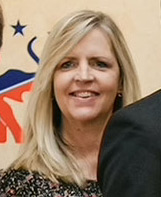
Joanna Hildreth

In addition to addressing the standing to sue for “right of association,” the 11th Circuit also addressed the subject of the ballot questions that were not allowed to be published as a violation of the county GOP’s “freedom of speech.” This aspect of the controversy in the case often gets eclipsed by the other aspect dealing with the right of association. The court said that even though the ballots are published by the government, that medium does not take away from a private entity’s freedom of speech. Catoosa GOP Chairman Joanna Hildreth (who was re-elected this year) & her team submitted three primary ballot questions last year to be included on the county GOP primary ballot, as political parties often do, but the Board of Elections refused to publish them.

The two primary ballot questions that the court included in their opinion were these:

”1. Do you think anti-Trump Democrats should be able to get a court order to force the elections board to qualify them as Republican candidates for office?

“2. Did you know that [the four excluded candidates (listed by name)] were not approved to run as Repub-licans by the Republican Party?”

The 11th Circuit Court remanded the case (sent the case back to the lower federal judge, presumably Judge Billy Ray in Rome) to take another stab at addressing the Catoosa GOP’s suit — this time on its merits.

You can read the entire opinion of the 11th Circuit Court by clicking here.

Mixed Messages from Chairman McKoon on Accountability Resolutions

Mixed Messages from Chairman McKoon on Accountability Resolutions

Suzi Voyles

We were very pleased that GA GOP Chairman Josh McKoon appointed the members of the convention Resolutions Committee who passed the resolutions censuring Speaker Jon Burns and instructing the GA GOP to not allow Brad Raffensperger to re-qualify in a Republican primary. In particular, Resolutions Committee Chairwoman Suzi Voyles and State Rep. Noelle Kahaian (R-Henry), GRA members on the committee, were instrumental in seeing these passed out of the committee and brought to the convention floor.

State Rep. Noelle Kahaian

The Raffensperger resolution passed the committee by a margin of 9 to 6. But the Burns censure resolution passed unanimously. We appreciate all of the support from the Resolutions Committee!

The delegates on Saturday collectively said “enough is enough” and instructed the employees and agents of the GA GOP to protect the Republican brand by not allowing Georgia’s current Secretary of State Raffensperger to have a spot on our next primary ballot. 

This resolution was a last resort after Republican activists had tried every possible way to express their concerns and work with the SOS to establish secure, transparent elections. The Republican Party has received intense opposition instead of assistance from the Secretary of State.

Many GRA members voted for Josh McKoon’s re-election as the GA GOP Chairman this past Saturday because of his show of support for accountability through these resolutions passed by his appointed committee.

However, since the state convention adjourned, Georgia Republicans have received some mixed messages from Chairman McKoon on this subject.

Yesterday multiple news outlets reported that Chairman McKoon had made a statement suggesting he probably would not enforce the resolution the delegation passed, and would allow Raffensperger to qualify in spite of the delegates’ instructions.

This is concerning since, according to the GA GOP Rules, the Chairman has no choice other than to obey the mandate of the delegation in the Raffensperger resolution. Section 5.1 of the GA GOP rules state clearly that the Chairman “shall perform the duties required … by the state convention.” This is one of those duties.

The state convention instructed McKoon to “refuse to qualify or allow to be qualified Brad Raffensperger…”. Josh McKoon has no discretion to not follow the explicit instructions of the state convention because the rules explicitly say he must “perform the duties of the state convention.”

Those who falsely believe that “Resolutions are not motions that are binding,” should read Roberts Rules of Order sections 59:67 and 10:13, which also governs the GA GOP. Indeed, since the mandate of the GA GOP Executive Committee to block Duncan was also made in the form of a resolution, Chairman McKoon already manifestly knows this is not true.

For the last four years, the Establishment of the GA GOP has fought against the GRA passing this Raffensperger resolution. Why would they have worked so hard to prevent it from passing at a state convention if resolutions are of no effect? Answer: They wouldn’t.

Chairman McKoon addressed the question of blocking wayward candidates from the primary ballot at our State Endorsement Convention, which you can see the video recording of here. He warned that attempting to block a candidate from running would require facing litigation from the candidate, but he never said he was unwilling to pursue that litigation. He has made similar statements on other occasions.

If the GA GOP takes this bold stand for election integrity by blocking Brad Raffensperger, this would likely inspire many election integrity loving Trump supporters to donate in support of the legal battle.

Grassroots Republicans love to see someone aggressively oppose corruption and the GA GOP would likely have no problem raising funds to pursue that litigation to defend the freedom of association. We predict Republicans will rally together just as we did to protect the alternate electors from 2020. We at the GRA pledge to back that effort.

Does Chairman McKoon think that this kind of blocking of a candidate from qualifying in the primary would be illegal? Apparently not, because he also yesterday morning put out a statement expressing his support for the Catoosa County GOP’s lawsuit against their RINO county commissioners:

We applaud Chairman McKoon for making this statement in support of the Catoosa GOP and their legal exercise of their First Amendment rights to “freedom of association,” but we encourage him to be consistent.

Georgia’s state code cannot supersede constitutional law. The state law must be interpreted in light of constitutional law, and constitutional law vests private entities like political parties with a right of association that cannot be undermined by statutory code. The U.S. Supreme Court has affirmed this multiple times in recent decades.

The text of the Raffensperger resolution

However, this above statement from Chairman McKoon does seem to somewhat contradict his statement being broadcast yesterday morning by the news. If the Catoosa GOP’s legal position has merit, then so does a similar effort by the GA GOP to block Raffensperger from the primary ballot.

We expect Chairman Josh McKoon to fulfill his duties as the GA GOP Chairman and to enforcethe expressed will of the GA GOP State Convention delegates.

The GRA hereby calls on Chairman McKoon to protect the reputation of the Georgia Republican Party from an elected government official who lacks integrity and does not share our commitment to accurate elections. 

We pledge to stand by him and support him in fulfilling that duty in every way possible when qualifying starts next March.

GAGOP Delegates Oust Brad Raffensperger Protecting Republican Brand

GAGOP Delegates Oust Brad Raffensperger Protecting Republican Brand

Dalton, GA – On Saturday, an overwhelming majority of delegates at the Georgia Republican Party state convention approved a resolution prohibiting Secretary of State Brad Raffensperger from being allowed to run in a future Republican primary.

The resolution states:

 “It is resolved that the Georgia Republican Party shall not qualify, allow to be qualified, or take any action to allow Brad Raffensperger to qualify as a Republican or run for any elected office unless and until a GAGOP Convention removes this restriction; and,

Be it further resolved that the Georgia Republican Party shall fully defend against any future litigation or legal action taken by Brad Raffensperger or others that in any way claims that the Georgia Republican Party is or can be required to allow Brad Raffensperger to run for public office as a Republican.”

This comes after the Secretary of State has repeatedly opposed and obstructed Republican efforts to establish secure and transparent elections. In addition to the well known Curling v. Raffensperger case which exposed and uncovered massive vulnerabilities in Georgia’s elections, the Dekalb GOP filed a lawsuit against Brad Raffensperger in regard to the encryption keys which were stored in the database in plain text. When this password became public knowledge election integrity activists made t-shirts featuring the password in order to expose the absurd vulnerability of the Dominion voting systems.

“The system is obviously not secure if the system admin password is so readily available,” said Field Searcy leader of Georgians for Truth and GRA Board member.

Some would go so far as to say that the Secretary of State’s actions do not represent incompetence, but rather malfeasance of office. Either way, it is clear Raffensperger did not meet the minimum standard the Republican Party expects from a Republican elected official.

Long Awaited Victory

Back in 2021, at the state convention in Jekyl Island, (the year Brad Raffensperger had been denied election as a Republican delegate in his own precinct) Alex Johnson (then GRA President) proposed a resolution censoring and blocking Brad Raffensperger. The idea was debated on the convention floor where the establishment along with chairman, Randy Evans argued that such an action was not legal, would lead to an expensive lawsuit, and the effort was ultimately not successful.

“After 16 years of Republican Party conventions, this was the most meaningful one in party history,” said Alex Johnson GRA Chairman and President of the NFRA.

While most resolutions merely express the views of the party and educate the public on issues, they usually have no teeth. This resolution was unique in that it gives direction to the party leadership and requires them to abide by it, and even take action to defend the decision from legal challenges. It is important to remember that political parties control ballot access for their primary. The Republican primary ballot doesn’t belong to the government or to the general public, it belongs to the Republican party.

The negative reputation of Georgia’s Secretary of State is well known, and Trump supporting patriots across the country recognize the name Brad Raffensperger due to the nationwide attention Georgia received as a result of the 2020 and 2021 elections.

Raffensperger has been known to threaten local county elections superintendent’s and boards if they feel inclined to change their system to comply with certain election laws. 

“Georgia counties don’t follow the election laws because of Raffensperger and his staff,” said Field Searcy.

In Dekalb County, Michelle Long Spears, a Democrat candidate for Commissioner and was shocked to see the election results that showed she received zero votes in her own precinct. She knew she voted for herself, and believed her husband also voted for her. When this concern about the accuracy of the Dekalb election was raised, and election integrity advocates called for a hand recount, the Secretary of State’s office opposed them. They conducted a hand recount anyway, and it completely altered the winner in the race! After the hand recount, instead of being in 3rd place Spears came in first. Advocates of election integrity have not forgotten that Brad Raffensperger attempted to block them from conducting that hand recount.

GA GOP Responsive to Republican Voters

The results of the non-binding ballot questions on the 2024 Republican primary ballot voters made it clear that election integrity is a major concern for Republican voters. 64% of Republican primary voters wanted hand marked paper ballots, and 80% wanted clean voter rolls requiring registered voters to renew their registration every four years. The Georgia Republican Party delegates responded.

This Resolution was a last resort after Republican activists have tried every possible way to express their concerns and work with the SOS to establish secure, transparent elections, and have received intense opposition instead of assistance.

The delegates on Saturday collectively said “enough is enough” and cut all ties with Georgia’s current Secretary of State. Raffensperger remains free to run for office as a Democrat or an Independent or join a third party, if they will have him. They concluded that we need to protect the reputation of the Georgia Republican party from an elected official who doesn’t share our commitment to election integrity. 

There were 1,713 Republican delegates in attendance Saturday not counting the alternates and guests observing in the back. The Raffensperger resolution was one of several included in a package that was submitted to the body by the resolutions committee under the leadership of Suzi Voyles and with strong support from state Rep. Noel Kahaian.

Getting the party to implement a minimum standard, requiring candidates to share a minimum level of adherence to the GOP platform has been a goal of the GRA for several years. Delegates visiting the GRA vendor table at the convention were eager to sign the GRA petition to block Raffensperger, who is arguably the most distrusted Republican politician in the state.

GRA members and supporters are excited about this massive victory and believe the GAGOP will be stronger and better able to engage and recruit new party members as a result of this action protecting the GOP brand.

This is an example of the GAGOP exercising their constitutional right to the freedom of association.

“The government cannot force a Baptist church to ordain a Hindu or a Muslim as their minister,” said Nathaniel Darnell, GRA President, “and they can’t force the Republican Party to associate with Brad Raffensperger when he relentlessly acts contrary to Republican beliefs and objectives.”

This resolution has the same effect as the Accountability Rule the GRA proposed at the 2023 GOP Convention, and the same effect as the actions taken by the Catoosa GOP in 2024.

While some argue that anyone and everyone should be allowed to claim the label “Republican” regardless of what they believe or how they act, we believe the Republican primary should be reserved for only those candidates who embrace at least a minimum number of the Republican principles outlined in our platform.

“This resolution serves as a warning to all Republican elected officials in Georgia who like to utilize the resources and volunteers in the Republican Party, while simultaneously stomping all over our platform and dismissing the legitimate policy concerns of party activists. We are grateful to all the delegates who voted in favor of the resolution and look forward to assisting the party in implementing other accountability measures to protect the Republican brand and protect Georgians who are being harmed by RINO public policy,” said Darnell.

Kemp Rejects Pleas to Veto SB 144, Fake Republicans Make Pesticide Manufacturers Immune from Lawsuits

Kemp Rejects Pleas to Veto SB 144, Fake Republicans Make Pesticide Manufacturers Immune from Lawsuits

Last week, despite receiving many calls and emails from concerned Georgians urging him to veto the bill, Governor Brian Kemp signed into law an appalling, unjust, anti-Republican bill, SB 144 which gives pesticide makers immunity from lawsuits if their products harm consumers. Pesticide producer Monsanto/Bayer has faced more than 150,000 lawsuits over Roundup.

“It is shocking that in the wake of the MAHA movement (“Make America Healthy Again”) our Republican state legislators would be so tone deaf as to give special immunity to Bayer/Monsanto,” said Nathaniel Darnell, GRA President. 

Reuters reported that Monsanto/Bayer “has paid about $10 billion to settle disputed claims that Roundup, based on the herbicide glyphosate, causes cancer.”

“We are exploring every possibility to end this litigation,” said Bayer.

Which Republican Legislators Voted for SB 144 and helped them avoid accountability in the courtroom?

Read More
Stark Contrast in 9th District GOP Chairman’s Race – GOP Accountability on the Line

Stark Contrast in 9th District GOP Chairman’s Race – GOP Accountability on the Line

Blue Ridge, GA – On Monday, the Fannin County Republican Party hosted a candidate forum
featuring MA-GA candidate for 9th District Chair Brian Parker and his opponent Stephen Aaron, a former employee of Speaker David Ralston. Fannin County activists got to witness a clear difference between the candidates as Brian Parker championed the need for the GOP to provide accountability to fake Republican candidates, and Aaron opposed it (see video timecode 51:10).

“We’ve got to have accountability,” said Brian Parker. “When you got a job, did you have an interview before you got your job? … Did you ever have a review [of your performance on the job]?
Would you want to work with somebody who is not pulling their weight, or who is working against the company? No!”

Brian Parker

After the Catoosa GOP adopted the Accountability Rule and implemented an interview for county commissioners, Republicans across Georgia are beginning to realize that the Republican party must start providing some quality control to the candidates they allow on the Republican ballot, ensuring candidates meet a minimum standard, or risk severe damage to the Republican brand and demoralizing voters.

Stephen Aaron, the other candidate for 9th District Chairman, openly opposed the idea of the Republican Party providing accountability to politicians.

“All the accountability rule is is a power grab…No, I am not in favor of the accountability rule!” said Aaron. “Because, as a political party, it is our job to elect Republicans to office – Republicans that go through the primary. The primary is their interview process.”

This image taken from Aaron’s LinkedIn profile shows he was employed by Ralston.

Brian Parker noted how the average voter isn’t paying attention and often makes election decisions based on a name that is familiar to them, or the ethnicity of a candidate or some other superficiality.

Stephen Aaron worked as a campaign manager in 2014 for the late Speaker David Ralston, who was criticized for his corrupt use of legislative continuance to postpone legal cases for his law practice, that resulted in many victims not getting their day in court for several years. He was also criticized for stalling many bills through the years that would have advanced the GOP platform. In 2019, then Representative Colton Moore was one of 10 legislators who signed on to a resolution calling for Ralston to resign for his unethical behavior.

Stephen Aaron going full-blown fan-boy on his Facebook for the late corrupt Speaker David Ralston

“Any GOP officer who has been a cheerleader for legislators with as terrible, unjust, and unprincipled a record as David Ralston’s is the epitome of Establishment!” said GRA President Nathaniel Darnell. “It is no surprise to find out that the people praising corrupt politicians are often on the politicians’ payroll! The paid political industry really has no business holding office in the Republican Party, since they have an inherent monetary conflict of interest when it comes to any accountability measures.”

In 2023 at the 9th District Convention, Stephen Aaron even presented a resolution to celebrate the legacy of Speaker David Ralston, but the hundreds of delegates resoundingly defeated the proposal.

Last week, on the other hand, Brian Parker spoke at the MA-GA candidate forum where he gave a rousing speech in support of the Republican platform and holding politicians accountable to it. Brian has previously served alongside Ron Hooper, former GRA NFRA Director, on the Fulton Defense Fund raising over $35,000 to support the three GOP electors who were targeted by Fani Willis. Their event ranked 11th in the state for total funds raised in 2023.

“Brian has shown a deep commitment to understanding the inner workings of the GOP, and he’s proven he can handle any challenge,” said Ron Hooper. “His greatest strength is his unwavering dedication to the America First movement and the mission to Make America Great Again. He holds politicians accountable and demands adherence to the Republican Platform.”

Brian has served as the chairman of the Bank’s County Republican Party.

“As the GOP stands at a crossroads, it is clear that bold leadership is essential for the party’s future. We need more individuals like Brian Parker—principled, passionate, and driven—to help restore the Republican brand and move us forward,” said Ron Hooper.”

Resolutions: Your Guide to the GA GOP District Conventions

Resolutions: Your Guide to the GA GOP District Conventions

You know the enemy: the definition of the Establishment. Now make sure you win at your district conventions.

If you’re a delegate or an alternate to a convention, the conventions are about YOU. You are the one who have control of the party at that time, and you are the one who can work to make things better. Either by having the party take a stand on issues, changing rules, or electing new party leadership. You are in control, but you need to know what’s going on. That’s what this is for:

The Georgia GOP is run between state conventions by the State Executive Committee, and the State Committee. This is in the GAGOP Rules.

The State Executive Committee consists of numerous officials, but the main one that needs to be discussed right now are “District Chairmen”. They are elected at upcoming district conventions.

Also, elected at district conventions are members of the “State Committee”. The Rules of the party are available here, and the convention call governing conventions this year is here.

At the district conventions coming up, you can pass party rules, district resolutions (actions by the district), as well as electing district officers and state committee members.

Here are some resolutions I personally suggest, as examples, you may want to pass (and to edit out the first line and submit them to the GAGOP State Convention, pursuant to the Call, above):

• Resolution Encouraging the GAGOP State Convention to Ban Brad Raffensperger from Qualifying as a Republican (.doc)

• Resolution Encouraging the GAGOP State Convention to Ban Jon Burns from Qualifying as a Republican

• Resolution Encouraging the GA GOP State Convention to Ban Anyone Making Races Non-Partisan from Qualifying as a Republican

• Resolution in Favor of the Anti-Corruption Act

Additionally, at the district conventions, the most important thing you can do is to ensure that no convention rules or agenda is passed (right toward the beginning of the convention) that do any of the following:

1. Prohibit or restrict the ability of people to run for office or to debate;
2. Increase the vote needed to or prohibit you from proposing resolutions or rules changes (it normally takes a majority vote);
3. Require a 2/3 vote for anything (Roberts Rules, which govern these meetings, already have a 2/3 requirement for things that need it: having a 2/3 vote for appealing decisions, making motions, or passing resolutions is designed to take away your rights as a delegate).

Make sure that ANY attempts to do this fail. When someone moves to adopt any convention rules, you’ll want to immediately stand up and state your opposition to them, point out it takes a 2/3 vote to pass any such convention rules, and immediately make a motion to amend the rules by striking each and every item in convention rules that do any of these things listed above. This is important even if you don’t want to run yourself, or you don’t have any resolutions.

Why? Because others in the crowd may not know what you know, and you should work to help make sure that “we the people”, not the Establishment, are in control.

Some districts have set deadlines (that you may or may not have known about) regarding when you can submit resolutions or nominations to run for office. Unlike at the state convention, where those deadlines cannot be easily voted down since they were part of the State GOP Convention call (above) which governs all conventions, you can easily do so at district conventions by voting against any such restrictions in the convention rules or the convention rules overall (because, again, it takes a 2/3 vote to pass such restrictive rules, and if the Chairman refuses to do a count, you can call out “Division!” and the chairman must count the votes)

You should definitely submit by any deadline if you can. But if you can’t, realize that your convention delegates (not some group who met ahead of time) have the power.

You’ll likely see committees, *appointed by the existing leadership*, telling you that certain resolutions, nominees, or rules are the only ones that should be considered. This is, again, designed to limit your rights. You are at these conventions to have your voice heard. If you’ve submitted any resolutions (or want to have them considered), make sure to get up and make a motion to make it happen. If you’re ever confused on what to do, you should stand up, be recognized by the chairman, and make a “Point of parliamentary inquiry” in order to ask how to accomplish whatever you are trying to achieve, be it nominating someone for office or having a resolution debated.

And while the resolutions linked above have not been endorsed by the GRA, you should definitely look for GRA members who may be able to help you with parliamentary procedures/motions in order to help achieve your goals.

Remember, if you are grassroots, you want to see people involved and having their voices heard. And you don’t want fearmongering by those in the political industry that try to discourage or dissuade you from being a leader to win out.

The Establishment falsely believes and states that you can drain the swamp by trying to get along with the swamp and not doing anything. We know, and we’ve seen it with President Trump, that bold action and rhetoric are both required in order to lead and to “drain the swamp”.

Thank you for your involvement in the convention cycle, and please be sure to forward this information to your friends.

Establishment “Pro-Life” Organization Attempts to Kill Equal Protection Pro-Life Bill

Establishment “Pro-Life” Organization Attempts to Kill Equal Protection Pro-Life Bill

Last week, after hundreds of grassroots pro-life activists flooded the Capitol urging GA Representatives to finally abolish abortion, the controlled-opposition “pro-life” establishment organization, Georgia Life Alliance (GLA) sent a letter to the committee in an effort to kill the pro-life bill, HB 441. Astoundingly, the letter urges legislators to not pass this bill out of committee even though it would save tens of thousands of babies in our state each year! GLA urged the legislators to not even hold a hearing on it! A shocking step from an organization that claims to work to end abortion. The letter does not offer suggestions for amending the legislation, but only requests legislators stop the bill — abort it, you might say.

The letter was signed by Claire Bartlett, Executive Director, and Bryan Tyson, Chairman of the Board of GLA. This is the same attorney Bryan Tyson who you might remember has been representing Secretary of State Brad Raffensperger, and Steven Henry, the RINO Commissioner suing the Catoosa GOP.

Sarah Pedro (right) with GRA NFRA Director Abigail Darnell (left) at the hearing for HB 441

“When I saw Georgia Life Alliance actively fighting against ending baby murder in Georgia my heart felt sick!” said Fulton GRA member Sarah Pedro. “Making something against the law does not criminalize any person or group of people, it deters the action. It’s why we have laws in the first place – to deter harmful actions perpetrated against innocent citizens.”

Since the U.S. Supreme Court overturned Roe v. Wade in 2022, grassroots pro-life activists have longingly worked toward the day a bill to finally end abortion would get traction under the Gold Dome.

According to the GA Dept. of Public Health, more than 30,000 babies were murdered by abortion in Georgia in 2023. HB 441 would finally establish justice and equal protection for abortion victims.

“Abortion will never be ‘unthinkable’ while it remains legal,” said GRA President Nathaniel Darnell. “It was disturbing to see fellow Republicans and even professing ‘pro-life’ Christians taking action alongside pro-abortion Democrats to oppose the protection of innocent pre-born children.”

The letter from Georgia Life Alliance discouraging legislators from supporting HB 441, falsely claimed that: “HB 441 changes long-standing Georgia protections for women and does not address or hold accountable the abortionist, the pimp, the sex trafficker, and the irresponsible man who will face no consequence and continue to prey on women and girls for their own selfish gain.”

This characterization is demonstrably untrue! If HB 441 were enacted, any man who pressured a woman to have an abortion, paid for the abortion, or committed the abortion would be party to a homicide. Being investigated for homicide is far from “no consequence” as GLA claimed. Any pimp who was party to a homicide could be investigated and the woman protected from consequences when a jury examines the evidence and testimony and it was proven that she did not have intent to kill.

Expectant mothers who want to do what is right and keep their baby would be better protected by HB441 than they are now. Lets be clear. Any jury will readily see that a human trafficking victim is not the guilty party in her abortion. Similarly, any pregnant minor whose parents forced an illegal abortion on her would not be the guilty party.

By providing equal protection and making abortion homicide, those trying to pressure an expectant mother to commit an illegal abortion would themselves be guilty of a crime, since it is criminal to coerce someone to commit a crime. This would give vulnerable pregnant women the opportunity to report the pimp or the irresponsible man to the police.

HB 441 would expand legal protection for Georgia mothers who are committed to protecting their child. HB 441 would provide a strong legal detterent to committing an abortion. It would also provide helpful counter pressure so a woman who wants to birth her baby is not swayed by those who might attempt to persuade her to have an illegal abortion.

Read More
State Legislature Finally Votes to Pass RFRA & Governor Kemp Promised the GRA He Would Sign

State Legislature Finally Votes to Pass RFRA & Governor Kemp Promised the GRA He Would Sign

Atlanta, GA — The Georgia State House voted to pass the Religious Freedom Restoration Act (RFRA) late this evening by a vote of 96 to 70. GRA-endorsed State Reps. Charlice Byrd (R-Cherokee) and Noelle Kahaian both voted in favor of the bill, which was S.B. 36.

We’re pleased that the State Legislature has finally passed RFRA legislation after all of these years of only talking about it! Back in 2017, the GRA put the question to each of the Republican gubernatorial candidates running in the primary, asking if they would be willing to sign RNFRA legislation, if elected Governor, and Brian Kemp was the first to make the pledge:

Therefore, we feel confident that Governor Brian Kemp will sign this version of the bill very soon.

The bill mirrors federal legislation that has been in place since 1993, and imposes new restrictions on state and local governments’ ability to “substantially burden a person’s exercise of religion” unless it is “in furtherance of a compelling governmental interest.”

RFRA was initially authored at the federal level in response to a U.S. Supreme Court decision Employment Division v. Smith, which held that the government could burden the right of “free exercise of religion,” contrary to the text of the 1st Amendment, as long as it could articulate a reason (any reason) for the burden — the so called “rational basis” test.

This made “free exercise of religion” claims secondary to other 1st Amendment-protected rights, such as “freedom of the press,” “free association,” or” free speech” claims that the government could only win upon demonstrating a compelling governmental interest in the restriction (the “strict scrutiny” test). The federal RFRA instructed courts to restore free exercise claims to the same category as all other First Amendment claims.

However, in 1997 the U.S. Supreme Court ruled in the case City of Boerne v. Flores case that federal RFRA only applied to claims against the federal government, not the state government. This is why many states have adopted their own state-version of RFRAs so that “free exercise of religion” claims against state and local governments are not treated as second class to other ones protected by the 1st Amendment.

Former Governor Nathan Deal, a Republican, vetoed the previous RFRA bill the Georgia General Assembly passed in 2016, which had been the brain-child of then-State Senator Josh Mckoon (R-Columbus). The fulfillment of a promise to pass a new version of RFRA has been a long time coming.

After 7 Years at Trial, Judge Dismisses “Election Integrity” Curling Case

After 7 Years at Trial, Judge Dismisses “Election Integrity” Curling Case

Attorney David Oles

In a shocking move, a judge today dismissed the case Donna Curling, et al. v. Brad Raffensperger, et al., claiming a lack of standing, even though the judge had previously ruled that standing was not a problem, and the judge had entertained many arguments on the merits of the case. GRA member David Oles has served as one of the attorneys on the case, representing Ricardo Davis from Cherokee County.

Key Facts:
• Case Background: The lawsuit, Donna Curling, et al. v. Brad Raffensperger, et al., was filed in 2017 in the U.S. District Court for the Northern District of Georgia, challenging the constitutionality of Georgia’s electronic in-person voting system. It spanned seven years, including a 17-day bench trial in January 2024.

• Plaintiffs: Georgia voters (e.g., Donna Curling, Jeffrey Schoenberg) and the Coalition for Good Governance (CGG), a nonprofit focused on constitutional rights and government accountability.

• Defendants: Georgia Secretary of State Brad Raffensperger and members of the Georgia State Election Board, sued in their official capacities.

• Original System: The case initially targeted Georgia’s Direct Recording Electronic (DRE) system, used since 2002. In 2019, the court enjoined its use.

• New System: Georgia adopted the Dominion Ballot-Marking-Device (BMD) system in 2019, implemented in 2020, which uses touchscreen devices to produce paper ballots with QR codes for tabulation.

• Voting Process: Voters select options on a BMD touchscreen, review them on-screen, print a ballot with human-readable text and a QR code, and scan it. The QR code, unreadable by humans, is used for tabulation.

Read More
Pro-Life Families Descend on Gold Dome During Abortion Hearing

Pro-Life Families Descend on Gold Dome During Abortion Hearing

Atlanta, GA — On Wednesday, around 200 pro-life advocates crowded outside the House Judiciary Non-Civil Committee for a hearing for the Prenatal Equal Protection Act (HB 441). Six years after the passage of the Heartbeat Law, and nearly three years after the overturn of Roe v. Wade, Georgia Republicans who control the State House finally allowed a committee hearing for a bill that would provide equal protection for pre-born children.

“It’s simple. We believe that the murder of anyone should be illegal for everyone,” said GRA President Nathaniel Darnell.

Click to watch GRA President Nathaniel Darnell testify in favor of the bill.

The crowd was so large the Georgia State Patrol officers struggled to keep a path clear through the hallway leading to the committee room. Opponents of the bill were wearing yellow stickers that said “Support and Compassion – not punishment.” Others wore T-shirts saying “Trust Black Women”. However they were far outnumbered, perhaps 4-1, by pro-life families complete with toddling children and strollers.

In 2023, the Georgia Department of Public Health documented there were 30,856 innocent children killed by abortion.

“In my obstetrics training I learned that I am always caring for two patients, the mother and the baby,” said Dr. Coleman Boyd. “As a physician I have never seen a case where killing the child would save the life of the mother.”

Dr. Boyd held a toddler, Haddasah, through his testimony and introduced her as his adopted daughter. He said she was conceived in rape. “Her 13-year old mother came to live with us, gave birth, and she was blessed to give this child life and now she is the delight of her soul.”

Watch Dr. Coleman Boyd testify in favor of the Preborn Equal Protection Act

HB 441 would ensure the same homicide laws that protect toddlers would also protect pre-born children.

Watch Jeff Durbin with “End Abortion Now” testify and answer questions from Democrat Reps.

Abortion advocates pretend all 4th amendment privacy rights would disappear if this bill were passed allowing women to be investigated for miscarriage, and allowing the government to immediately begin spying on people in their homes, which is absurd.

Rep. Charlice Byrd opposes Democrat signs

The Fourth Amendment states:
“The right of the people to be secure in their persons, houses, papers, and effects, against unreasonable searches and seizures, shall not be violated, and no Warrants shall issue, but upon probable cause, supported by Oath or affirmation, and particularly describing the place to be searched, and the persons or things to be seized.”

If there is no reason to suspect foul play, there is no reason to investigate.

Are parents investigated every time a toddler tragically drowns in a swimming pool?

Did parents lose all privacy rights when our current homicide laws were adopted?

Everyone knows that little kids are extremely vulnerable and can be easily hurt or killed, and pre-born babies even more so. Georgia law distinguishes between the intentional murder of a toddler and the tragic accidental death of a toddler and it would be the same with miscarriage. Even with the flaws in our legal system a jury should be able to distinguish between elective abortion and accidental miscarriage, just like they do with the accidental death of toddlers.

Additionally, you would still have all the wonderful legal requirements like due process, trial by jury, presumption of innocence until proven guilty, etc. These would help to ensure justice is done, and no innocent person would get punished.

What about women who are victims of human trafficking?

The pro-life Establishment wants laws to carve out a special exemption for expectant mothers, so that they have complete legal immunity to commit an abortion. They claim that because of the existence of trafficking victims, therefore the law should exempt all expectant mothers from any consequences.

Certainly some post-abortive mothers are victims and not responsible for the abortion (trafficking victims, etc.) but we can’t assume all women are victims in prenatal homicide. Under HB 441 every case will need to be considered based on the facts and evidence and whether you can prove beyond reasonable doubt that someone (the doctor/parents/grandparent/pimp etc.) knew their victim was a human being and they had intent to kill. If you can prove that, why should it matter if you are a medical professional?

This is justice, when the law is applied equally to everyone.

“Parents have a responsibility to protect their children,” said Jason Storms, National Director of Operation Save America, during the hearing. Georgia law currently recognizes parental and familial responsibilities in our child support, alimony, and criminal neglect laws. It is not unreasonable to assume that those parental responsibilities apply to children before they are born.

Chairman Tyler Paul Smith (R-Bremen) did not call for a vote on HB 441, but allowed the legislators to ask questions and explore the merits of the bill. It was disappointing to see so many Republican legislators leave the committee room mid-way through the hearing. We are grateful Rep. Charlice Byrd (R-Woodstock) was present throughout all the public testimony. Since crossover day has passed and HB 441 did not get a committee and house vote in time, the bill will likely not be taken up again until 2026, but Republican activists intend to use this time to continue to impress on their legislators the urgency of this life and death legislation.