GRA Board Calls Out Political Harassment from the State Ethics Commission
Today, the GRA Board issued the following statement in response to the State Ethics Commission:

Today, the GRA Board issued the following statement in response to the State Ethics Commission:

Atlanta, GA — This morning the Fulton County Superior Court issued a Writ of Mandamus that requires the Fulton County Commission to accept the two appointments that GRA-member & Fulton County GOP Chairwoman Stephanie Endres made to the Fulton County Board of Elections: Julie Adams and the GRA’s Election Integrity Action Group Chairman Jason Frazier. Both of them have pointed out countless flaws with Fulton’s election systems since 2020.
This court decision represents a great victory for our GRA activists and election integrity activists in Fulton County, who have been vigilantly fighting the corruption for the last five years. Jason and Julie’s combined presence on the Board of Elections would bring with it heightened scrutiny and awareness of Fulton County’s corruption.
As many will remember, over four years ago, in 2021, the Fulton County Republican Party was a nexus of the Establishment, and the county convention that year had more votes than eligible voters and had an extensive appeal process due to the Establishment’s initial loss which, disappointingly, led to the Establishment staying in charge in one of the most populous counties in the state.

That all changed two years ago, in 2023, when grassroots activists, led by former Johns Creek city council member and GRA endorsed candidate Stephanie Endres, defeated the Establishment in Fulton County. Then, this year, in 2025, after two years of the Establishment refusing to unify and work with the grassroots activists in Fulton, and spreading lies about them during the convention process, Fulton County GOP Chairman Stephanie Endres and her team were re-elected again in a resounding victory.
Now, why does this matter? Due to their victories, the Fulton County Republican Party was able to appoint two really principled Republicans to the Fulton County Board of Registrations and Elections: Jason Frazier, head of the GRA Election Intergrity Committee, and Julie Adams.
Both of them are anti-Establishment fighters for Republican values.
This is a big deal, since often the people appointed by the Establishment to these positions are self-interested RINO types who get appointed to these positions because they will act nice and friendly with the Democrats, but not fight for what the party wants on the board.
Essentially, Establishment people appointing Establishment people.
Jason and Julie are the opposite of that.


Which is why the Fulton County Board of Commissioners refused to accept their appointment to the Board of Registrations and Elections.
The Fulton County Republican Party, under this anti-Establishment leadership, refused to back down and brought a lawsuit against the Fulton County Board of Commissioners for not following the law.
Reportedly funded by the Republican National Committee with connections made through the GAGOP, the Fulton County Republican Party, under Stephanie’s leadership, received a favorable ruling earlier this week, stating that it was unlawful to refuse the appointments of Julie Adams and Jason Frazier.
Many are concerned that the Fulton County Commission, which is controlled by Democrats, will attempt to appeal the decision of the Fulton Superior Court. But with this decision, it appears that such action would only prolong the inevitable win for Stephanie, Jason, and Julie.
Now, while the litigation is still ongoing and may still continue, it is important to recognize the important truth: who is elected into party leadership matters.
The Establishment fears making appointments that will stand for the people/party instead of with the political industry. The Establishment fears lawsuits instead of fighting for the party to be relevant and active.
That’s not what the grassroots/”We the People” do. And it’s not what Fulton County GOP’s leadership did.
There aren’t always a lot of victories to celebrate, but I would encourage you to message the anti-establishment Fulton County GOP leadership and congratulate them on the win, and thank them for their hard work and not backing down.
Because it’s not easy to put up with faux Republicans trying to minimize your accomplishments while not truly caring about election integrity. And thanking and congratulating fellow grassroots activists when things go well?
It’s the least we can do.


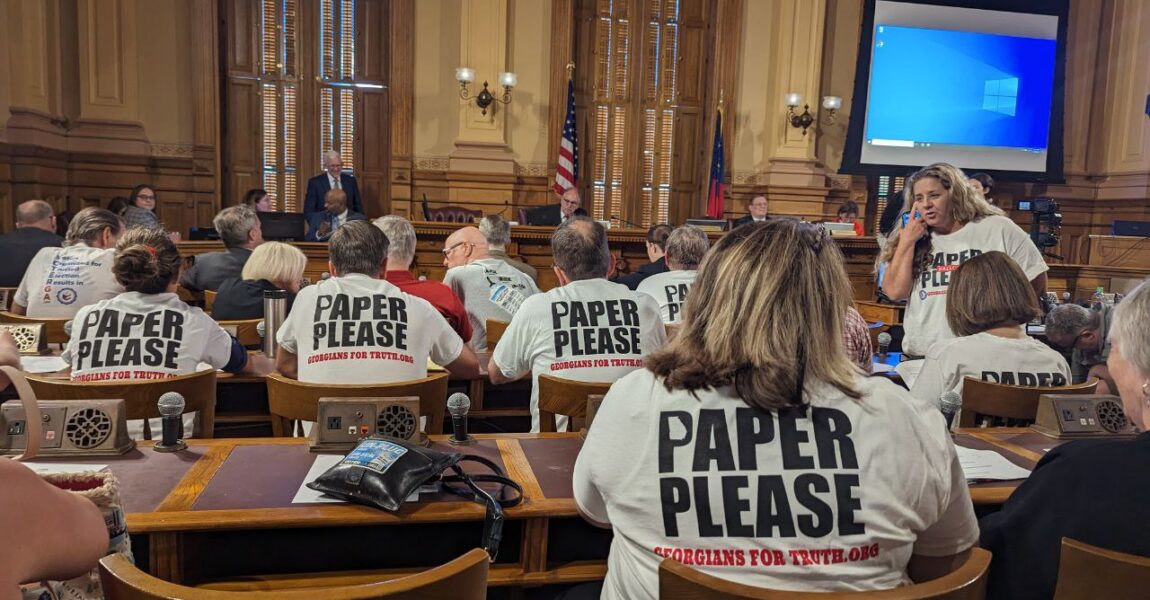
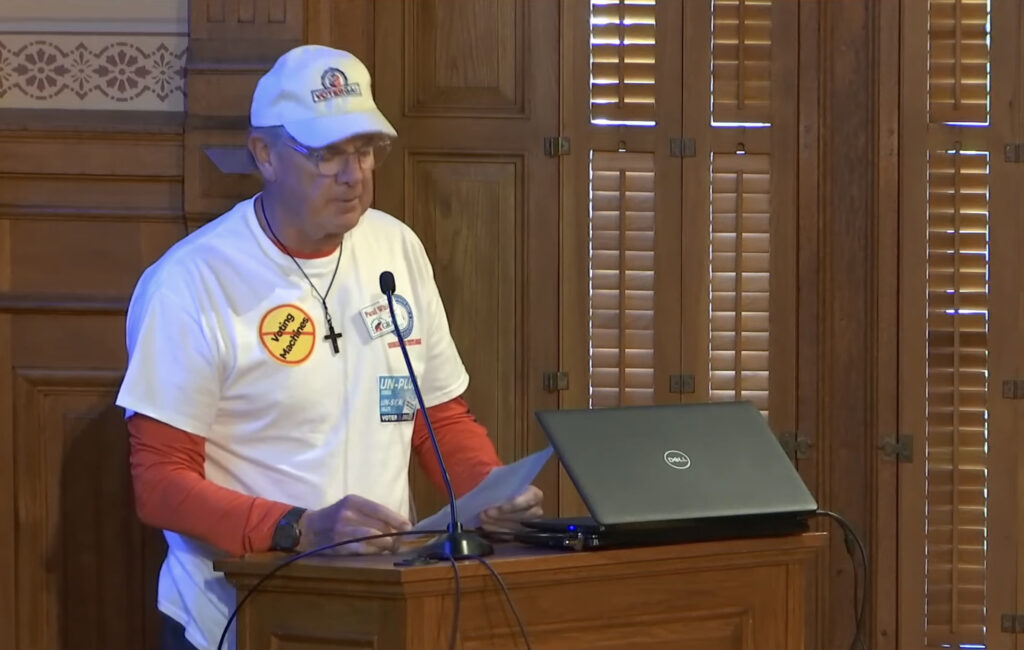
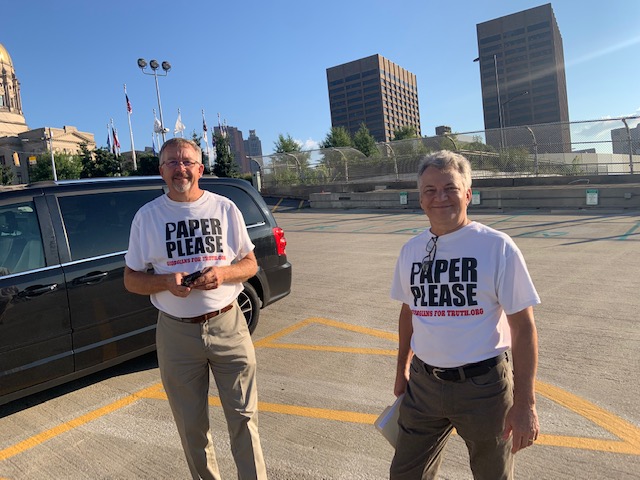
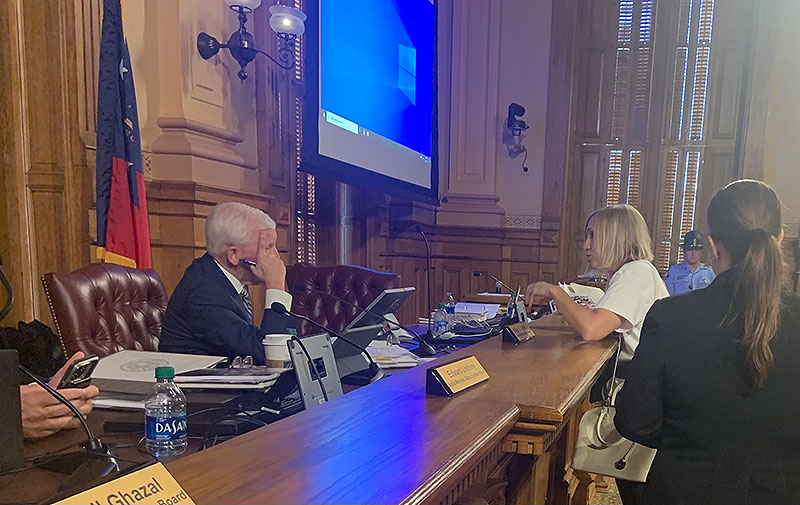
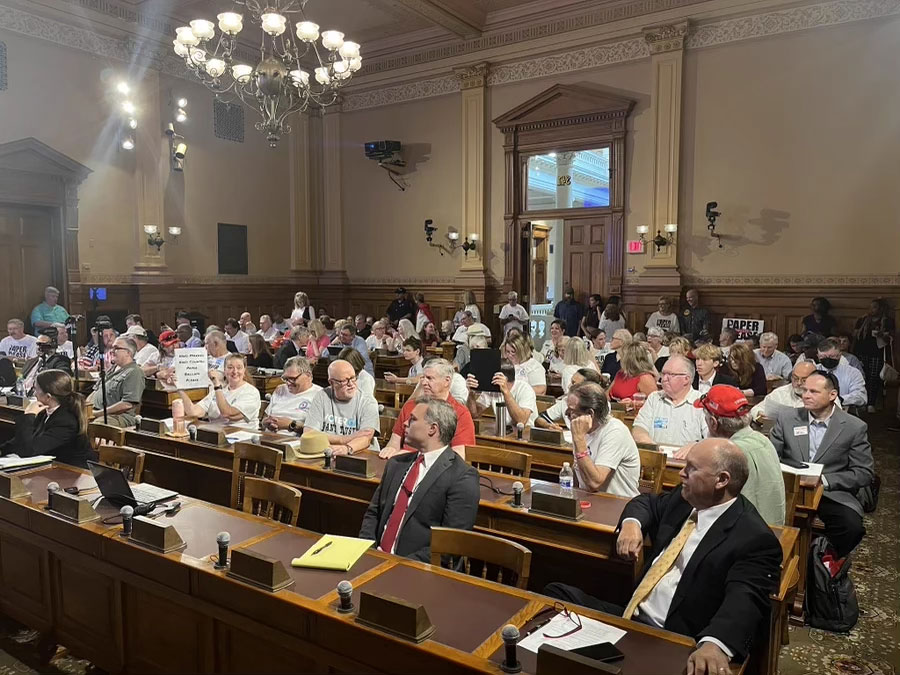
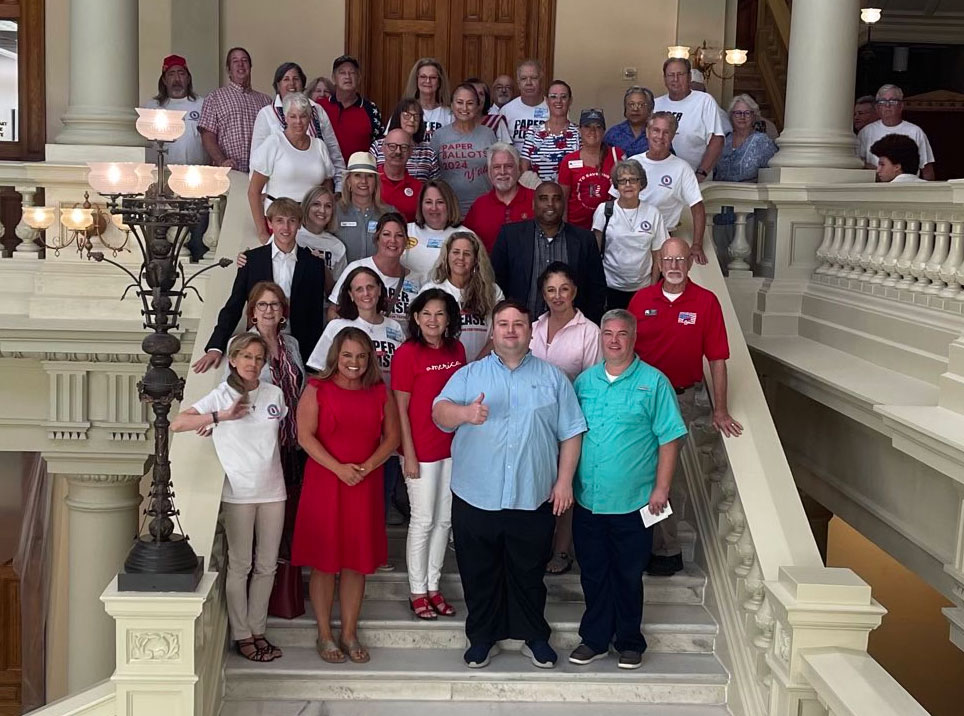
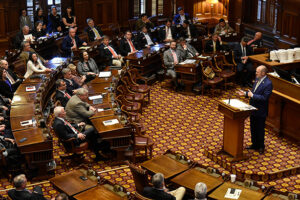
Atlanta, GA — On last Tuesday, dozens of election integrity activists (many of whom are GRA members) spoke before the State House’s “Blue Ribbon Study Committee” at the State Capitol, urging legislators to adopt real election integrity reform in Georgia.

“Much like the fable The Emperor’s New Clothes, we continue to hear strong declarations that Georgia’s elections are secure, yet beneath these confident statements of public trust and high turnout, are persistent, well-documented problems that are impossible to ignore for anyone paying attention,” said GRA member Field Searcy, leader of Georgians for Truth, during public comments.
The public speakers included both conservatives and Democrats however the vast majority advocated for hand marked paper ballots.
Cheating can also occur using paper ballots, they would be auditable and can be verified with a “paper trail,” unlike the electronic Dominion system.
“We are still voting on the same system we voted on in 2020,” said election integrity leader Sam Carnline, also with Georgians for Truth.
Garland Favorito of VoterGA also spoke and raised concerns that our voter data has been outsourced to a Sales Force cloud and our PII (Personally Identifiable Information) is going to third parties without our consent.
This Study Committee may be an attempt to placate the election integrity patriots without providing any meaningful reform, but if so, it is still a good sign that Georgia legislators felt a need to do so. This is an indication of progress for the election integrity movement. Every meeting gives activists an opportunity to keep pressure on the legislators and make our concerns heard by both legislators and constituents. Hopefully we can break through the noise to awaken the disengaged Republicans who only pay attention on Election Day.

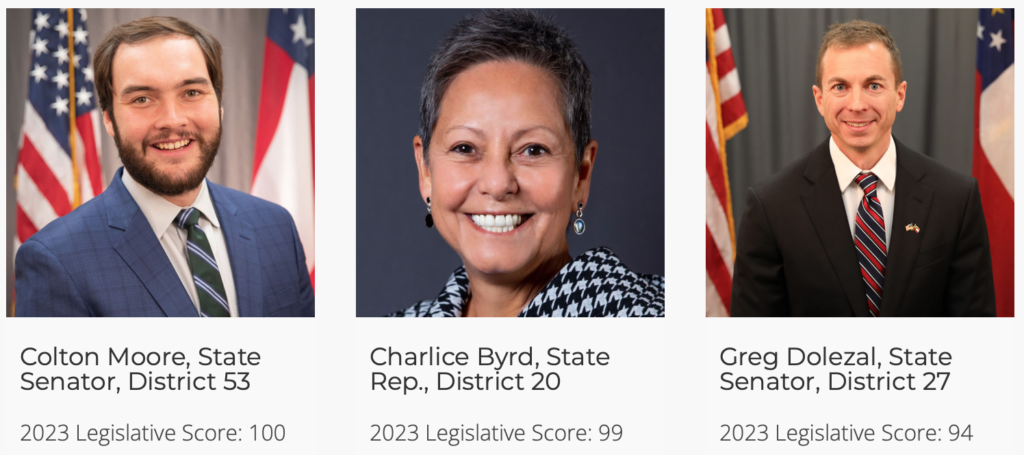
We desperately need your Republican-voting friends, neighbors and church members to help us turn Georgia around by getting politically informed and engaged in between elections. Please encourage your less-engaged Republican friends to take a look at our Legislative Scorecards and sign up for our email newsletter on our website.
We urge all GRA members to consider attending the next Blue Ribbon committee meeting August 8th in Rockmart.
Another opportunity to advance election integrity is coming up at the State Election Board Meeting July 29th-30th at 9AM at the Georgia State Capital – Room 341.
If you cannot join in person you can use this Remote link: https://www.youtube.com/@GAStateElectionBoard/streams/.

Atlanta, GA — The federal 11th Circuit Court of Appeals has reversed the trajectory of the Catoosa GOP’s case dealing with their right to refuse to allow four RINO past-serving commissioners to run again as Republicans in the primary. We felt confident this would eventually happen as the case made its way up the ladder in the federal appeals process because SCOTUS precedent on this subject is so clearly favorable to the Catoosa GOP’s position.
The court also rebuked the lower court Judge Bill Ray in Rome for not recognizing the Catoosa GOP’s right to “freedom of speech” when the Board of Elections refused to publish the questions the Catoosa Republican Primary had submitted for the primary ballot last year.
The Catoosa County Republican Party issued this statement:

Opponents to accountability on the primary ballot have argued that Georgia’s state law does not allow political parties to deny primary ballot access, but the 11th Circuit said any such restrictions in the state law would be in violation of the 1st Amendment’s protection of “freedom of association.” In addressing the Catoosa GOP’s standing to sue, one key part of the text of the federal court’s opinion said:
“We respectfully disagree with the district court’s reasons for distinguishing our Duke cases. The court noted that this case in-volved a county-level political party, rather than a state or national party. But we see no reason why a county-level party, and its constituent members, would not also enjoy the right to freedom of association and the right to identify those who constitute the local party based on political beliefs. See id. The court also suggested that the Duke cases are different because they involved a presidential primary where the party ‘enjoyed substantial discretionary power’ to select candidates, but Georgia state law ‘provides no discretion for a county party to deny qualification to candidates based on substantive concerns.’ See O.C.G.A. § 21-2-153. That state law may prevent the Catoosa GOP from excluding primary candidates for ideological reasons, though, simply shows that its right to freedom of association has been burdened. It does not negate the right. After all, a political party’s constitutional right to exclude, ‘central to its freedom of association,’ is not derived from state law. Wash. State Grange v. Wash. State Republican Party, 552 U.S. 442, 445 (2008).” (Underlining added.)

In addition to addressing the standing to sue for “right of association,” the 11th Circuit also addressed the subject of the ballot questions that were not allowed to be published as a violation of the county GOP’s “freedom of speech.” This aspect of the controversy in the case often gets eclipsed by the other aspect dealing with the right of association. The court said that even though the ballots are published by the government, that medium does not take away from a private entity’s freedom of speech. Catoosa GOP Chairman Joanna Hildreth (who was re-elected this year) & her team submitted three primary ballot questions last year to be included on the county GOP primary ballot, as political parties often do, but the Board of Elections refused to publish them.
The two primary ballot questions that the court included in their opinion were these:
”1. Do you think anti-Trump Democrats should be able to get a court order to force the elections board to qualify them as Republican candidates for office?
“2. Did you know that [the four excluded candidates (listed by name)] were not approved to run as Repub-licans by the Republican Party?”
The 11th Circuit Court remanded the case (sent the case back to the lower federal judge, presumably Judge Billy Ray in Rome) to take another stab at addressing the Catoosa GOP’s suit — this time on its merits.
You can read the entire opinion of the 11th Circuit Court by clicking here.
Last week, despite receiving many calls and emails from concerned Georgians urging him to veto the bill, Governor Brian Kemp signed into law an appalling, unjust, anti-Republican bill, SB 144 which gives pesticide makers immunity from lawsuits if their products harm consumers. Pesticide producer Monsanto/Bayer has faced more than 150,000 lawsuits over Roundup.
“It is shocking that in the wake of the MAHA movement (“Make America Healthy Again”) our Republican state legislators would be so tone deaf as to give special immunity to Bayer/Monsanto,” said Nathaniel Darnell, GRA President.

Reuters reported that Monsanto/Bayer “has paid about $10 billion to settle disputed claims that Roundup, based on the herbicide glyphosate, causes cancer.”
“We are exploring every possibility to end this litigation,” said Bayer.
Which Republican Legislators Voted for SB 144 and helped them avoid accountability in the courtroom?
Read MoreState Rep. Noelle Kahaian (R-Henry) is a rising star in the Georgia General Assembly, and her story is remarkable and inspiring. First, she had an amazing win against a RINO incumbent Lauren Daniel (who earned a 34% vote score her freshman year) who out-spent her 6-to-1. Then Noelle survived the pressure-cooker from the Establishment in her first legislative session, developing a reputation has resilient patriot defending our Republican principles in policy-making.
Our GRA President Nathaniel Darnell interviewed her to tell her impressive story, which you can now watch here:
Atlanta, GA — The Georgia State House voted to pass the Religious Freedom Restoration Act (RFRA) late this evening by a vote of 96 to 70. GRA-endorsed State Reps. Charlice Byrd (R-Cherokee) and Noelle Kahaian both voted in favor of the bill, which was S.B. 36.
We’re pleased that the State Legislature has finally passed RFRA legislation after all of these years of only talking about it! Back in 2017, the GRA put the question to each of the Republican gubernatorial candidates running in the primary, asking if they would be willing to sign RNFRA legislation, if elected Governor, and Brian Kemp was the first to make the pledge:

Therefore, we feel confident that Governor Brian Kemp will sign this version of the bill very soon.
The bill mirrors federal legislation that has been in place since 1993, and imposes new restrictions on state and local governments’ ability to “substantially burden a person’s exercise of religion” unless it is “in furtherance of a compelling governmental interest.”
RFRA was initially authored at the federal level in response to a U.S. Supreme Court decision Employment Division v. Smith, which held that the government could burden the right of “free exercise of religion,” contrary to the text of the 1st Amendment, as long as it could articulate a reason (any reason) for the burden — the so called “rational basis” test.
This made “free exercise of religion” claims secondary to other 1st Amendment-protected rights, such as “freedom of the press,” “free association,” or” free speech” claims that the government could only win upon demonstrating a compelling governmental interest in the restriction (the “strict scrutiny” test). The federal RFRA instructed courts to restore free exercise claims to the same category as all other First Amendment claims.
However, in 1997 the U.S. Supreme Court ruled in the case City of Boerne v. Flores case that federal RFRA only applied to claims against the federal government, not the state government. This is why many states have adopted their own state-version of RFRAs so that “free exercise of religion” claims against state and local governments are not treated as second class to other ones protected by the 1st Amendment.
Former Governor Nathan Deal, a Republican, vetoed the previous RFRA bill the Georgia General Assembly passed in 2016, which had been the brain-child of then-State Senator Josh Mckoon (R-Columbus). The fulfillment of a promise to pass a new version of RFRA has been a long time coming.

In a shocking move, a judge today dismissed the case Donna Curling, et al. v. Brad Raffensperger, et al., claiming a lack of standing, even though the judge had previously ruled that standing was not a problem, and the judge had entertained many arguments on the merits of the case. GRA member David Oles has served as one of the attorneys on the case, representing Ricardo Davis from Cherokee County.
Key Facts:
• Case Background: The lawsuit, Donna Curling, et al. v. Brad Raffensperger, et al., was filed in 2017 in the U.S. District Court for the Northern District of Georgia, challenging the constitutionality of Georgia’s electronic in-person voting system. It spanned seven years, including a 17-day bench trial in January 2024.
• Plaintiffs: Georgia voters (e.g., Donna Curling, Jeffrey Schoenberg) and the Coalition for Good Governance (CGG), a nonprofit focused on constitutional rights and government accountability.
• Defendants: Georgia Secretary of State Brad Raffensperger and members of the Georgia State Election Board, sued in their official capacities.
• Original System: The case initially targeted Georgia’s Direct Recording Electronic (DRE) system, used since 2002. In 2019, the court enjoined its use.
• New System: Georgia adopted the Dominion Ballot-Marking-Device (BMD) system in 2019, implemented in 2020, which uses touchscreen devices to produce paper ballots with QR codes for tabulation.
• Voting Process: Voters select options on a BMD touchscreen, review them on-screen, print a ballot with human-readable text and a QR code, and scan it. The QR code, unreadable by humans, is used for tabulation.
Read More
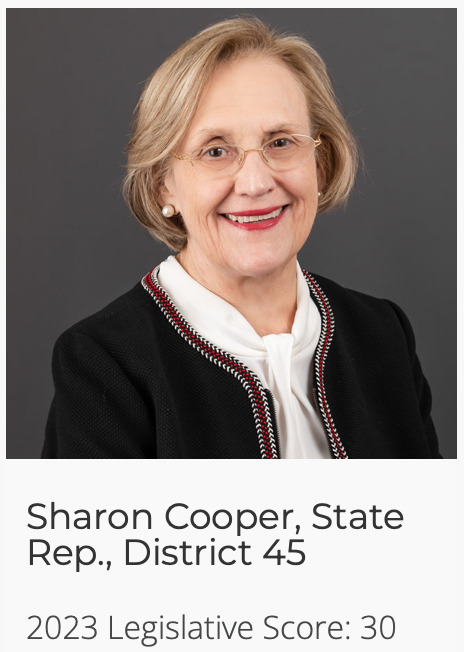
Atlanta, GA — In a surprise move, Speaker Jon Burns (District 159) did not this year assign State Rep. Emory Dunahoo‘s (District 31) new version of the Equal Protection Pro-Life Bill H.B. 441 to Sharon Cooper‘s (District 45) Public Health Committee. Last term, the bill had been assigned to Cooper’s committee, where it died on the vine as Cooper did not ever allow the bill to come up for discussion or a vote in a hearing. Cooper has been long known as perhaps the least pro-life Republican state legislator at the capitol. But today the Speaker instead assigned the bill to the Judiciary Non-Civil Committee chaired by State Rep. Tyler Paul Smith (District 18).
“This is such a big step!” said GRA Junior NFRA Director Abigail Darnell, who also serves as the elected 1st Vice President of Georgia Right to Life (GRTL). “Finally, we will be discussing elective abortion in the category of criminal justice — not healthcare — as the debate has been wrongly framed in the past.”

Rep. Tyler Paul Smith is expected to ensure the bill does receive a hearing this time since he was one of the co-sponsors on the bill in the previous term. If the bill is approved by the committee, it can then be brought up and voted on by the full State House. Republicans outnumber Democrats on that committee 12 to 5.
“Passing this legislation would simply bring state law into conformity with the Georgia Republican Party platform on this subject,” said GRA President Nathaniel Darnell. “We should expect every Republican legislator on the committee to vote in its favor.”
GRA-endorsed State Rep. Charlice Byrd (Cherokee) is one of the members of the committee, and a co-sponsor of the bill.
But in order for any House Bill to have a hope of passing and becoming state law, it must be voted on and pass the State House by “Crossover Day,” which is expected to be March 6th. Supporters have started calling State Representatives on the committee to urge them to vote in support of the bill as drafted.
“There will probably be some who wrongfully want to water down the text of the bill or add all kinds of imaginable exceptions for non-normative situations,” said Darnell. “But it is the job of the jury in a trial to determine if a homicide in a particular case is justifiable or excusable, that is not the job of the state code. This bill would simply say that elective abortion should be treated like any other type of homicide. As with any other homicide, the jury must evaluate the facts of a specific case. It is wrong to carve out exceptions for a particular type of homicide, such as the killing of people of a particular race or age. Equal justice is when the law applies to everyone equally.”
Contact Legislators in Support of HB-441
You can do your part to end legalized abortion in Georgia by calling or emailing the committee members and urging them to vote HB 441 out of committee to the House for a vote, and then on to the Senate chamber for a vote!
Contact the office of Representative Tyler Paul Smith and the following members of the House Judiciary Non-Civil Committee and urge them to give HB 441 a hearing!